Putting Down Roots: How Remington Is Trading Investor Turnover for Real Neighbors
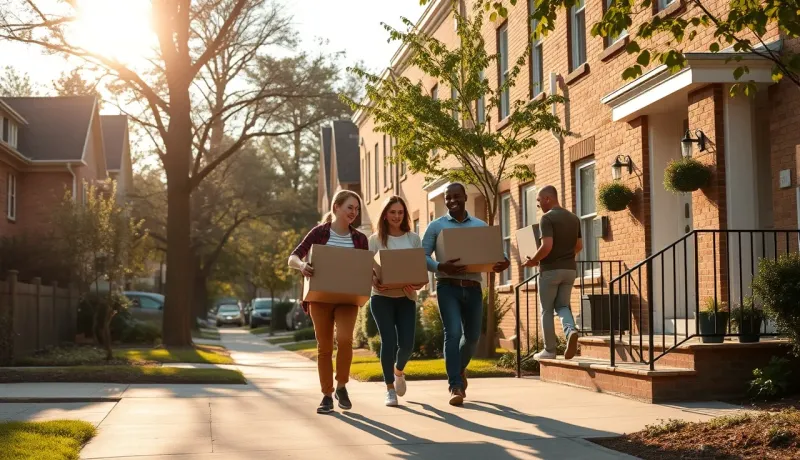
Photo: family moving into rowhouse neighborhood urban residential street, via voucherready.com
A Different Kind of For-Sale Sign
Not long ago, a house going up for sale in Remington was just as likely to end up as somebody's rental portfolio addition as it was to become somebody's forever home. Investors—some local, some from out of state—recognized the neighborhood's bones early. They bought, they renovated, they rented. And for a while, that cycle kept the market moving.
But something has quietly shifted. Walk the blocks around Remington today and you'll notice it in small ways: a freshly painted porch swing, a kid's bike chained to a railing, a family unloading groceries on a Tuesday afternoon. These aren't rental tenants cycling through on 12-month leases. These are people who bought in—literally—and plan to stay.
"I've been selling in this neighborhood for over a decade," says one Remington-based real estate agent who asked to be identified only by her first name, Donna. "The mix used to be maybe 40 percent investor buyers when I'd list a property. Now I'm seeing offers that are overwhelmingly owner-occupants. It's a real change."
Why Investors Are Stepping Back
The economics tell part of the story. Rising purchase prices in Remington—driven by genuine demand—have compressed the margins that made the neighborhood so attractive to buy-and-hold investors in the first place. When you can't pencil out a cash-flowing rental at current prices, you either overpay and hope for appreciation or you move on to the next opportunity.
Many investors have moved on. And in their wake, they've left a housing stock that's increasingly landing in the hands of people who plan to actually live in it.
There's also a policy layer worth noting. Local housing advocates and neighborhood associations have spent years pushing for incentives that favor owner-occupants—things like priority review periods for non-investor buyers and down payment assistance programs aimed at first-timers. Those efforts haven't solved every affordability challenge, but they've tilted the playing field in meaningful ways.
"When we started advocating for owner-occupant protections, people said we were dreaming," says Marcus, a longtime Remington resident who's been active in neighborhood organizing for years. "Now I look around and I see families on streets that used to have nothing but absentee landlords. That's not an accident."
What It Feels Like From the Inside
Ask recent buyers what drew them to Remington and you'll hear a version of the same answer: they wanted a neighborhood with a pulse. Not a suburb that empties out at 9 a.m. when everyone drives to work. Not a trendy district where the storefronts change every six months. Something with texture—and people who care about it.
Jamila and her husband closed on their Remington rowhouse about 18 months ago after renting in the neighborhood for two years. "We knew we wanted to buy here. We'd already built friendships, found our coffee spot, figured out the farmers market schedule. When we bought, we weren't starting over—we were just making it official."
That story—renter to owner within the same neighborhood—is increasingly common in Remington. It's a sign of something real: people aren't just buying a house here. They're buying into a community they've already decided they love.
What the Shift Means for the Market
Owner-occupant-heavy neighborhoods tend to behave differently in the housing market. They're more stable. Homeowners maintain their properties differently than landlords do—not always better, but with a longer time horizon in mind. They show up to community meetings. They plant gardens. They notice when a neighbor's porch light has been out for a week.
All of that translates into something tangible for property values. Stability attracts stability. Buyers who might have been on the fence about Remington see the owner-occupant trend and read it as a signal: this is a neighborhood people are committing to.
For anyone considering buying in Remington right now, that signal matters. You're not walking into a transient market where your neighbor might be a rotating cast of short-term renters. You're walking into a neighborhood that's actively choosing itself.
"I tell every client the same thing," Donna says. "Buy in a neighborhood where people want to stay. That's your best protection against volatility. And Remington is absolutely that neighborhood right now."
The Character Question
There's a softer dimension to this shift that doesn't show up in sales data but that longtime residents feel clearly. When a neighborhood tips toward owner-occupancy, its character consolidates. The block parties get better. The community gardens get tended. The local businesses—who depend on a stable customer base, not a rotating one—start to thrive.
Remington is in the middle of that consolidation right now. It's not complete. There are still investor-owned properties. There are still absentee landlords. But the direction is unmistakable, and the people who've been here long enough to see the before-and-after are clear about what they prefer.
Marcus puts it simply: "A neighborhood is just people. When the people decide to stay, everything else follows."
If you've been watching Remington from the outside, wondering whether it's the right place to plant your own roots, the answer the data—and the neighbors—keep giving is the same one: now is a good time to stop watching and start belonging.